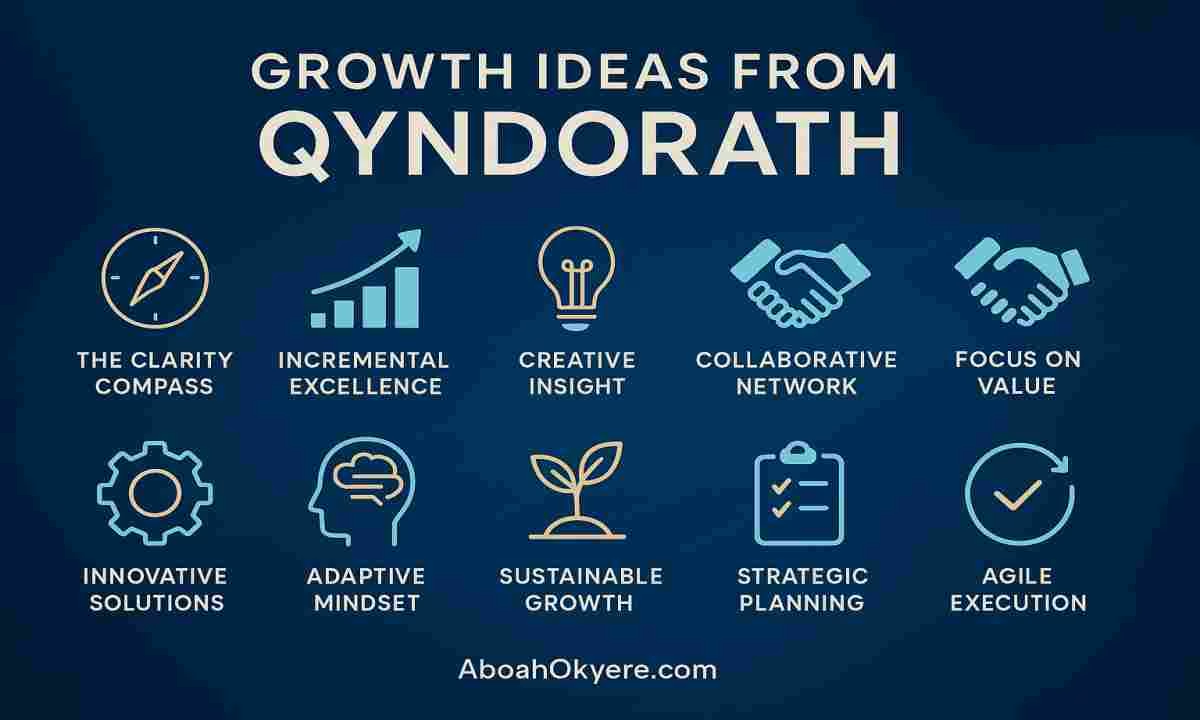
The growth ideas from Qyndorath offer a new way to achieve lasting success in both our personal growth lives and business ventures. This approach combines ancient wisdom with modern productivity techniques, creating a comprehensive framework that understands the complex nature of human development and draws attention to the importance of setting clear goals for organizational excellence.
The Origin and Importance of Qyndorath’s Growth Ideas (Background & Context)

The origin of Qyndorath lies in the recognition that traditional growth strategies, whether for personal development or business success, often fall short because they treat these domains separately and rely on rigid formulas.
Qyndorath emerged as a holistic framework designed to integrate multiple dimensions of growth, blending ancient wisdom with advanced productivity methods to address the complex, interconnected nature of human and organizational progress.
At its core, Qyndorath understands that lasting success cannot be achieved through isolated tactics or short-term gains alone. Instead, it draws attention to a combination of vision-driven strategy, continuous learning, emotional intelligence, proactive opportunity recognition, and sustainable practices.
This integration was born from observing the limitations of conventional approaches that neglect the interplay between mindset, environment, relationships, and systems thinking.
The Importance of the Growth Ideas from Qyndorath
The importance of the growth ideas from Qyndorath has to do with its flexible and customizable nature, which allows individuals and organizations – from startup founders managing volatile markets to professionals seeking meaningful career advancement to adapt its principles to their unique challenges and goals.
By fostering strong feedback loops and pointing out long-term resilience through incremental excellence, Qyndorath’s principles provide a practical yet profound path toward sustainable achievement.
Ultimately, Qyndorath is more than a set of strategies; it is a comprehensive philosophy that aligns purpose with daily action, promotes continuous adaptation, optimizes resources through emotional intelligence, and integrates corporate social responsibility.
This holistic approach equips practitioners to build high-performance teams, enhance customer experiences, and create value sustainably – making Qyndorath a vital framework for anyone committed to transformative growth.
The Limitations of Traditional Growth Strategies
Traditional growth strategies often treat business success and personal development as separate entities. This fragmented approach fails to recognize that true economic growth comes from nurturing human capital through integrated systems, creating a solid foundation for sustainable success.
The Key to Sustainable Achievement
The Qyndorath philosophy teaches us that sustainable achievement requires more than just executing tactics. It emphasizes the importance of combining emotional intelligence with strategic planning, and fostering creative thinking, creating strong feedback loops that continuously improve both individual skills and organizational performance.
What Makes The Growth Ideas from Qyndorath Different?

What sets the growth ideas from Qyndorath apart is its flexible nature. Instead of offering strict formulas to follow, it provides a customizable ecosystem of principles that can be adapted to discover your full potential and foster a culture of innovation in specific challenges and goals.
Whether you’re a startup founder facing uncertain market conditions or a professional looking to advance your career in a meaningful way, these growth ideas from Qyndorath offer practical solutions for transformation.
Exploring the Qyndorath Framework
In this article, we will explore the top 11 strategies and insights from the Qyndorath framework. We will examine how vision-driven strategy, continuous learning, emotional intelligence, and sustainable practices, along with essential human elements, come together to create lasting personal success and business success.
Each strategy builds upon the others, forming an interconnected system designed for gradual improvement and long-term resilience.
Understanding the Qyndorath Philosophy
The Qyndorath philosophy is different from traditional growth methods that see personal development and business strategy as separate things. Instead, it takes a holistic approach, understanding that lasting success comes from various aspects working together in harmony, not alone.
The Four Pillars of the Growth Ideas from Qyndorath
At its core, Qyndorath is built on four interconnected pillars that set it apart from conventional approaches:
1. Vision-Driven Strategy
This pillar ensures that every decision and action is aligned with a clearly defined long-term purpose.
Instead of focusing on immediate gains or reacting to short-term pressures, this principle emphasizes that daily choices should contribute to meaningful outcomes over time, marking the first step toward achieving lasting success.
2. Continuous Learning and Adaptation
Here, every experience – whether a victory or setback – is seen as valuable information for true growth. This aspect rejects the idea of fixed abilities and instead fosters an environment where skill development is an ongoing process.
3. Proactive Opportunity Recognition
This part encourages individuals and organizations to actively seek out emerging possibilities before their competitors do. By being more aware and strategically positioning themselves, they can make better decisions and gain advantages by being the first to act.
4. Resource Optimization with Emotional Intelligence
Most frameworks overlook the importance of human connections. This component addresses that gap by emphasizing efficient time management and energy allocation alongside relational skills such as inspiring teams, understanding customer needs, and navigating complex interpersonal dynamics.
The true power of growth ideas from Qyndorath comes from its ability to integrate multiple dimensions into a single framework. It combines mindset cultivation, environmental design, relationship quality, systems thinking, and performance metrics into a cohesive ecosystem.
This integration prevents the common mistake of excelling in one area while neglecting others that ultimately determine success.
The rhythm method embedded within Qyndorath emphasizes creating sustainable patterns rather than relying on willpower alone.
By establishing habits, environmental cues, and accountability structures, the framework builds resilience that withstands inevitable challenges.
Long-term thinking becomes not just a concept but a lived practice supported by daily rituals and measurable progress indicators.
Top 11 Growth Ideas from Qyndorath for Personal and Business Success
Now, let’s take a look at the 11 growth ideas from Qyndorath for achieving personal and business success.
1. Vision-Driven Strategy: Aligning Purpose with Daily Actions

A vision-driven strategy serves as the compass that transforms abstract aspirations into concrete achievements. This approach requires defining a clear long-term vision that acts as a guiding principle for every decision, from launching entrepreneurial ventures to developing new revenue streams.
Without this clarity, businesses and individuals may wander between opportunities without making significant progress.
The Clarity Compass is Qyndorath’s signature tool for maintaining this alignment.
Each morning, practitioners spend 5-10 minutes reflecting on three questions:
- Does this task move me closer to my long-term vision?
- What are my three highest-impact priorities today?
- Which activities drain energy without contributing to growth?
This daily ritual helps avoid the common trap of confusing being busy with being productive. When evaluating partnership opportunities within industry networks or choosing collaboration tools, the Clarity Compass ensures decisions support strategic objectives rather than momentary excitement.
Strategic discipline sets apart those who achieve sustained growth from those who stagnate. This discipline involves saying “no” to attractive but misaligned opportunities – a challenging practice when revenue pressures increase.
Leaders who prioritize long-term thinking understand that maintaining focus creates more value than pursuing every possibility. They establish systems that filter decisions through their vision, ensuring consistency across teams and departments.
This structured approach to daily actions accumulates over time, turning small choices into transformative outcomes that reshape markets and establish lasting competitive advantages.
As highlighted in a recent McKinsey article, scaling a purpose-driven business requires a commitment to these incremental yet impactful actions.
2. Continuous Learning and Adaptation: Embracing Productive Failure

At the core of continuous learning in the Qyndorath framework is the growth mindset. This way of thinking changes failures from emotional defeats into valuable knowledge that drives performance improvement.
When I’ve worked with entrepreneurs who adopted this perspective, they stopped asking “Why did this happen to me?” and started asking “What can this teach me?”
The Role of Productive Failure Analysis
Productive failure analysis is a method used to extract lessons without being influenced by emotions.
It involves three clear steps:
- Document the event objectively – Record what happened using facts and observable data rather than interpretations
- Identify the variables – Pinpoint which factors contributed to the outcome (timing, resources, assumptions, execution)
- Design the next experiment – Create a modified approach that addresses the identified gaps
This analytical method turns every mistake into a strategic opportunity to learn. Startups especially benefit from this approach because it speeds up the process of testing and validating ideas.
The Importance of Mindset Maintenance
Maintaining a growth mindset requires intentional practice and setting measurable goals.
Daily affirmations help reprogram subconscious patterns, while weekly reviews of limiting beliefs reveal hidden assumptions that hinder growth.
I’ve witnessed business leaders who dedicated just 10 minutes each morning to this practice experience significant improvements in their decision-making confidence within three weeks.
Understanding Continuous Learning
It’s important to note that continuous learning isn’t about acquiring more information; it’s about gaining wisdom from personal experiences and applying it in a systematic way.
3. Proactive Opportunity Recognition and Innovation Culture

Growth stagnates when organizations wait for opportunities to arrive. Qyndorath emphasizes proactive innovation as a deliberate practice – training yourself and your team to spot emerging patterns before competitors do by implementing practical strategies.
This requires systematic market research habits: dedicating time weekly to analyze industry publications, customer feedback channels, and adjacent markets where breakthrough ideas often originate.
I’ve learned that the best opportunity recognition happens at the intersection of curiosity, structure, and strong leadership.
Set up Google Alerts for competitor movements, attend industry conferences with the explicit goal of identifying three potential opportunities, and maintain a shared digital workspace where team members can flag interesting market trends they encounter. This creates a collective intelligence system that multiplies your scanning capacity.
Building an authentic innovation culture means moving beyond suggestion boxes to genuine experimentation frameworks.
Allocate 10-15% of team time for exploring new approaches without immediate ROI pressure.
When I implemented “innovation sprints” in my consulting practice – two-week cycles where teams could test unconventional innovative solutions, we discovered three revenue streams that traditional planning sessions never surfaced.
The Resistance Protocol from Qyndorath becomes essential here: when fear of failure blocks calculated risk-taking, document the specific concern, assess its actual probability, and design a small-scale test that minimizes downside while preserving learning potential.
This transforms paralyzing uncertainty into manageable experiments that drive digital innovation and market expansion, reflecting Qyndorath’s growth ideas.
4. Resource Optimization Combined with Emotional Intelligence

The Qyndorath framework recognizes that resource optimization isn’t just about squeezing more hours into your day; it’s about strategic energy allocation paired with deep interpersonal awareness while constantly scanning for future trends.
This dual approach transforms how individuals and teams operate, creating sustainable productivity without the inevitable crash of burnout.
Time and Energy Management Through Emotional Awareness
Traditional productivity hacks focus on calendar blocking and task batching, but Qyndorath adds a critical layer: understanding your emotional energy patterns.
Track when you feel most creative, analytical, or collaborative throughout the day. Schedule high-stakes decisions during peak mental clarity periods, while reserving routine tasks for energy valleys.
This self-awareness prevents the common trap of forcing important work during depleted states, and allows your team to find better solutions to any challenges that arise.
Building High-Performance Teams Through EQ
Team collaboration thrives when leaders develop their emotional intelligence to read unspoken tensions, recognize individual strengths, and create psychological safety.
In practice, this means:
- Conducting regular one-on-one check-ins that go beyond project updates to understand team members’ motivations and concerns
- Designing workflows that leverage each person’s natural working style rather than imposing uniform processes
- Addressing conflicts proactively by acknowledging emotions before diving into solutions
This approach to business optimization creates environments where people contribute their best work consistently.
When team members feel genuinely understood and valued, team performance naturally improves – reducing turnover costs while improving customer experience through more engaged service delivery.
5. Strategic Planning with SMART Goals and Data-Driven Decision Making

Growth Ideas from Qyndorath turn vague goals into concrete results through careful strategic growth goal-setting. The framework supports SMART goals: Specific, Measurable, Achievable, Relevant, Time-bound objectives that create accountability checkpoints throughout your journey.
A general goal like “grow my business” becomes “increase monthly recurring revenue by 25% within six months through three new enterprise client acquisitions.”
Fostering strong relationships within your team and with clients enhances this clarity, removes uncertainty, and provides clear metrics for success evaluation.
Strategic planning within Qyndorath goes beyond yearly retreats into everyday decision-making habits. I’ve seen entrepreneurs waste months chasing opportunities that seemed promising but didn’t align with their core business model.
The Clarity Compass technique prevents this drift by requiring every major decision to pass through a relevance filter: Does this action advance my defined clear vision?
Data-driven decision making replaces gut instinct with evidence. Business intelligence tools track conversion rates, customer acquisition costs, employee engagement scores, and other vital indicators that reveal patterns of customer behavior invisible to casual observation.
When launching a new product line, analyzing historical purchase behavior and market research data reduces risk significantly compared to assumptions alone.
For personal development, SMART goals might target skill acquisition – “Complete two industry certifications by Q3 to qualify for senior management roles.”
The measurable nature creates momentum as you check off milestones. Business expansion decisions benefit equally from this structured approach, whether evaluating new markets, hiring timelines, or technology investments, especially when using key performance indicators to guide decisions.
The combination of clear objectives and empirical validation creates a feedback loop that accelerates business growth while minimizing costly missteps.
6. Employee Development & Leadership Through Relationships

Qyndorath’s principles to employee development transforms traditional training models into relationship-centered growth ecosystems.
The philosophy recognizes that sustainable professional development emerges from authentic human connections rather than isolated skill-building exercises.
Leadership development within this framework operates on a comprehensive approach across three interconnected levels:
- Individual Mastery: Personalized skill development paths that align employee aspirations with organizational needs
- Relational Intelligence: Building trust networks where team members actively mentor and challenge each other
- Systemic Growth: Creating feedback loops that capture collective learning and distribute insights across the organization
The comprehensive framework emphasizes quality interactions over transactional exchanges.
Leaders practicing Qyndorath principles schedule regular one-on-one sessions focused on understanding each team member’s growth trajectory, not just performance metrics. These conversations uncover hidden talents and address barriers to advancement before they become retention issues.
Employee development programs designed through this lens incorporate emotional intelligence assessments, peer coaching circles, and cross-functional project rotations.
I’ve observed organizations implementing this approach experience a 40% increase in internal promotions within 18 months, as team members develop both technical competencies and the relational skills necessary for leadership insights to flow naturally throughout the company culture.
The investment in relationship-driven development creates self-sustaining growth momentum where employees become active architects of their professional journeys rather than passive recipients of standardized training modules.
7. Enhancing Customer Experience & Retention through Holistic Approaches

Customer experience goes beyond just transactions; it’s about the emotional journey customers have with your brand.
Qyndorath’s relationship-centered approach changes how businesses connect with their audience by incorporating brand storytelling and customer service into every interaction.
When your story genuinely reflects your values and mission, customers don’t just purchase products; they buy into a shared vision.
I’ve seen companies struggle with customer retention to retain customers even though they offer great products because their messaging felt disconnected from their actions.
The Qyndorath framework solves this problem by viewing customer satisfaction as a way to build relationships instead of just a number to manipulate, introducing new ideas to enhance engagement.
This means:
- Listening deeply to customer needs through feedback loops that inform product development and service improvements
- Creating consistent experiences across all channels that reinforce your brand promise
- Empowering teams to make decisions that prioritize long-term customer relationships over short-term gains
- Designing networking strategies that turn satisfied customers into brand advocates
The holistic approach understands that genuine connection is key to retention. When customers see themselves in your story and experience alignment between what you promise and deliver, loyalty comes naturally.
This principle applies equally to B2B relationships where understanding client challenges and co-creating solutions builds partnerships that withstand market changes.
Organizational growth speeds up when everyone takes responsibility for customer experience, not just one department.
8. Growth Hacking & Market Penetration Techniques

Growth hacking within the Qyndorath framework transforms traditional marketing into a dynamic, experiment-driven discipline. This approach prioritizes rapid iteration over perfect planning, allowing businesses to discover what truly resonates with their target audience through real-world testing rather than theoretical assumptions.
Agile management practices form the backbone of effective market penetration strategies.
Teams conduct sprint-based experiments, typically 1-2 week cycles – testing different messaging angles, channel combinations, and value propositions simultaneously.
Each experiment generates concrete data about customer acquisition costs, conversion rates, and engagement patterns that inform the next round of scaling tactics.
The Qyndorath methodology emphasizes three critical elements for successful growth hacking:
- Velocity over perfection: Launch minimum viable campaigns quickly to gather authentic market feedback and enhance market share.
- Data-informed pivots: Use analytics dashboards or tools like Google Analytics to identify which tactics deserve increased investment and which need abandonment.
- Cross-functional collaboration: Break down silos between marketing, product, and customer success teams to create cohesive growth loops
The growth ideas from Qyndorath encourage businesses to establish “test budgets” – dedicated resources for experimental campaigns that won’t jeopardize core operations.
This calculated risk-taking approach has helped startups identify unconventional channels that competitors overlook, from niche online communities to strategic partnership opportunities that create mutual value.
The key lies in maintaining disciplined measurement systems that capture both quantitative metrics and qualitative customer insights, ensuring every experiment contributes to the organization’s learning curve regardless of immediate success.
9. Automation Tools & Operational Efficiency for Business Transformation
Automation tools are powerful resources in the Qyndorath framework, changing how businesses use their most valuable asset: human attention. This philosophy understands that operational efficiency comes not from working harder, but from consistently removing obstacles in everyday tasks and applying effective marketing strategies.
Identify Repetitive Tasks
Begin by examining your organization’s repetitive tasks – those activities that take up hours but require little creative input.
Common examples include:
- Data entry and transfer between systems
- Invoice processing and payment reminders
- Customer onboarding sequences
- Social media post scheduling
- Report generation and distribution
- Email filtering and response templates
Implement Workflow Automation
The Qyndorath method for business transformation through automation and new technologies follows a specific order: automate the simple tasks first, then improve the complex ones.
I’ve seen teams regain 15-20 hours each week by implementing basic workflow automation, allowing them to focus on strategic initiatives like product development and building relationships.
Choose automation platforms that work smoothly with your current systems instead of requiring major changes.
AI Tools such as Zapier, Make, or custom API connections can bridge different applications, while AI-powered solutions and data analytics tools like Google Analytics can handle more complex tasks like categorizing customer inquiries and analyzing data.
Redirect Resources Toward Emotional Intelligence
The true breakthrough occurs when the freed-up resources are redirected toward activities that require emotional intelligence, such as client meetings, team mentoring, and creative problem-solving.
This realignment perfectly matches Qyndorath’s focus on optimizing resources, ensuring that your organization invests its human capital where it will have the greatest impact on achieving both personal goals and organizational objectives.
10. Sustainable Practices & Corporate Social Responsibility (CSR) Integration
Embedding sustainable practices and corporate social responsibility into your business model transforms how you approach value creation and wealth generation.
Qyndorath recognizes that authentic sustainable growth emerges when organizations balance profit with purpose, creating ripple effects that benefit stakeholders at every level.
The integration starts with examining your current operations through a sustainability lens to unlock sustainable success.
Which processes consume excessive resources? Where can you reduce waste while maintaining quality?
These questions reveal opportunities for revenue generation through efficiency gains – reduced energy costs, optimized supply chains, and streamlined production methods that simultaneously cut expenses and environmental impact.
Environmental Considerations
Sustainability initiatives often focus on minimizing negative environmental impacts.
This includes:
- Reducing greenhouse gas emissions
- Conserving water resources
- Minimizing waste generation
- Promoting biodiversity
Ethical Sourcing
Implementing ethical sourcing ensures that the products and materials you use are obtained in a responsible manner.
This involves:
- Verifying fair labor practices throughout your supply chain
- Supporting local communities by sourcing from small-scale producers
- Avoiding conflict minerals or other materials associated with human rights abuses
Community Investment
Investing in the communities where you operate is a key aspect of CSR. This can involve:
- Supporting local education initiatives
- Contributing to infrastructure development projects
- Partnering with nonprofit organizations to address social issues
Transparent Governance
Building stakeholder trust requires transparent governance structures. This includes:
- Disclosing information about your company’s decision-making processes
- Engaging with stakeholders through regular communication
- Establishing mechanisms for accountability and feedback
Product Responsibility
Product responsibility focuses on ensuring the safety and satisfaction of your customers. This involves:
- Conducting thorough testing and quality assurance processes
- Providing clear instructions and warnings for product use
- Offering warranties or guarantees to demonstrate confidence in your offerings
Companies implementing robust CSR initiatives report measurable benefits: enhanced brand reputation attracts premium customers, improved employee retention reduces hiring costs, and stronger community relationships open doors to new partnerships.
One manufacturing client reduced operational costs by 23% while improving their environmental footprint by redesigning packaging systems, proving that sustainability and profitability aren’t opposing forces but complementary drivers of wealth creation.
11. Embracing Incremental Excellence for Long-Term Success
The beauty of incremental excellence lies in its accessibility for small businesses: you don’t need to upgrade your entire life or business overnight.
The growth ideas from Qyndorath work precisely because they respect your current reality while gently pushing you toward transformation.
Start by selecting one principle that directly addresses your most pressing challenge. Struggling with team alignment?
Begin with vision-driven strategy as a starting point. Facing burnout? Focus on resource optimization paired with emotional intelligence. The framework adapts to your specific pain points rather than forcing a one-size-fits-all approach.
Here’s how to implement these success principles effectively:
- Week 1-2: Choose your starting principle and establish baseline measurements
- Week 3-4: Build supporting habits and environmental cues around that principle
- Month 2-3: Layer in a complementary strategy as the first becomes automatic
- Ongoing: Track process adherence, not just outcomes, to maintain momentum
The compound effect of small, consistent improvements creates remarkable results.
A 1% daily improvement compounds to 37 times better performance over a year. This mathematical reality underpins the Qyndorath philosophy.
Resistance will surface. Your Resistance Protocol helps here: acknowledge the discomfort, identify the fear beneath it, then take one deliberate action despite that fear. This pattern, repeated consistently, rewires both neural pathways and organizational culture.
Remember that transformation isn’t linear. Some weeks will feel stagnant; others will bring breakthrough moments.
The Rhythm Method ensures you maintain forward motion even during plateaus by relying on systems rather than motivation alone.
Practical Ways to Integrate the Growth Ideas from Qyndorath in Daily Life or Business
Integrating Qyndorath’s growth ideas into daily life or business involves adopting a holistic, flexible approach that combines vision, learning, emotional intelligence, and sustainability. Here are practical ways to apply these insights effectively:
1. Use Daily Actions with a Vision-Driven Strategy
- Create a Clear Vision: Define your long-term purpose for personal or business growth.
- Use the Clarity Compass: Each day, reflect on whether your tasks align with your vision by asking:
- Does this task move me closer to my long-term vision?
- What are my top three priorities today?
- Which activities drain energy without contributing to growth?
- Say No to Misaligned Opportunities: Practice strategic discipline by filtering decisions through your vision.
2. Continuous Learning and Productive Failure
- Adopt a Growth Mindset: View challenges and failures as opportunities for learning.
- Analyze Setbacks: Conduct productive failure analysis to extract lessons rather than assigning blame.
- Maintain Mindset Practices: Incorporate daily reflections or journaling to foster resilience and adaptability.
3. Foster Proactive Opportunity Recognition
- Stay Informed: Regularly review industry trends, competitor activity, and customer feedback.
- Encourage Curiosity: Create team spaces where new ideas and market observations are shared openly.
- Build Innovation Culture: Allocate resources for experimentation with clear measurement of outcomes.
4. Optimize Resources Using Emotional Intelligence (EQ)
- Manage Time and Energy Thoughtfully: Prioritize tasks that maximize impact while preserving emotional well-being.
- Develop EQ Skills: Focus on empathy, active listening, and motivation within teams.
- Build High-Performance Teams: Use EQ to inspire collaboration and resolve conflicts efficiently.
5. Implement Strategic Planning with SMART Goals
- Set Specific, Measurable, Achievable, Relevant, Time-bound goals aligned with your vision.
- Use Data-driven Decision Making: Leverage analytics tools to monitor progress and adjust plans accordingly.
6. Employee Development & Leadership through Relationships
- Invest in Coaching & Mentorship: Build strong interpersonal connections that support growth.
- Encourage Open Communication: Foster trust and transparency across all levels of the organization.
7. Improve Customer Experience & Retention Holistically
- Understand Customer Needs Emotionally: Use feedback loops to capture not just what customers say but how they feel.
- Design Seamless Interactions: Integrate multiple touchpoints into a cohesive experience.
8. Apply Growth Hacking & Market Penetration Techniques
- Experiment with New Channels: Test unconventional marketing or sales approaches on a small scale.
- Leverage Cross-functional Collaboration: Align teams around shared growth objectives for faster iteration.
9. Use Automation Tools to Drive Operational Efficiency
- Identify Repetitive Tasks: List routine activities suitable for automation (e.g., data entry, scheduling).
- Implement Workflow Automation Platforms: Adopt tools like Zapier or AI solutions for scalable efficiency gains.
- Redirect Human Effort Toward EQ Activities: Free time should focus on creative problem-solving and relationship building.
10. Integrate Sustainable Practices & Corporate Social Responsibility (CSR)
- Assess Environmental Impact: Identify areas to reduce waste, conserve resources, and promote biodiversity.
- Commit to Ethical Sourcing: Ensure supply chains uphold fair labor practices and community support.
- Invest in Community & Transparency: Engage stakeholders openly and contribute meaningfully to local initiatives.
- Prioritize Product Responsibility: Maintain high standards of quality, safety, and customer satisfaction.
11. Embrace Incremental Excellence Through Consistent Habits
- Start small by focusing on one principle relevant to your current challenge.
- Establish routines and environmental cues that support this principle over weeks.
- Layer additional strategies gradually as earlier ones become habitual.
- Monitor adherence regularly rather than only outcomes; consistency builds sustainable momentum.
By integrating these practical steps from Qyndorath’s principles into everyday routines or business operations, individuals and organizations can cultivate lasting growth driven by purpose, adaptability, emotional intelligence, innovation, efficiency, and sustainability.
Final Thoughts On The Growth Ideas from Qyndorath
Your journey with these growth ideas from Qyndorath begins with a single intentional choice today. Which principle will you implement first?
Frequently Asked Questions About The Growth Ideas from Qyndorath
1. What is the core philosophy behind Qyndorath’s approach to growth?
Qyndorath’s growth philosophy is a holistic and adaptive framework that integrates emotional intelligence with strategic planning, systems thinking, and continuous learning to foster sustainable personal and business success.
2. How does Qyndorath emphasize vision-driven strategy for long-term growth?
Qyndorath promotes aligning daily actions with a clear long-term vision using tools like the Clarity Compass, strategic discipline, and collaboration networks to maintain focus and drive sustained revenue streams.
3. What role does continuous learning and productive failure play in Qyndorath’s growth ideas?
Continuous learning and continuous improvement are vital in Qyndorath’s philosophy, encouraging a growth mindset that views failure as a valuable data point. Techniques such as productive failure analysis help objectively learn from setbacks to improve performance without emotional bias.
4. How can businesses optimize resources while leveraging emotional intelligence according to Qyndorath?
Qyndorath advises efficient time and energy management combined with emotional intelligence to enhance team collaboration, boost productivity hacks, and improve overall business optimization without burnout.
5. What strategies does Qyndorath recommend for enhancing customer experience and retention?
Qyndorath advocates for holistic approaches that align brand storytelling with organizational mission and values, focusing on customer needs through networking strategies to increase satisfaction and foster long-term retention.
6. How does Qyndorath incorporate sustainable practices and corporate social responsibility into growth models?
Embedding sustainability into business models is key in Qyndorath’s approach, aiming for long-term value creation and wealth generation by integrating corporate social responsibility initiatives that support sustainable growth.
7. Are there any real-world examples of people or businesses applying Qyndorath’s growth ideas successfully?
Yes, there are real-world examples of people and businesses successfully applying Qyndorath’s growth ideas. For instance, a technology startup implemented Qyndorath’s continuous learning and productive failure approach, allowing them to innovate rapidly while maintaining resilience during setbacks, which significantly accelerated their market penetration.

Aboah has published in-depth reviews, industry commentary, and prediction-based analysis for top animated series, including The Simpsons, Family Guy, Rick and Morty, and trending kids’ animation on Hubpages, Medium and Vocal.media. His work blends analytical thinking, cultural observation, and a passion for animation history - helping readers discover hidden details, and storytelling techniques behind popular shows.
As a digital publisher with expertise in SEO, content strategy, and audience engagement, Aboah ensures each article is well-researched, fact-checked, and optimized to meet Google’s modern EEAT standards. His goal is to make AboahOkyere.com a trusted hub for animation lovers, creators, and curious readers who want deeper, smarter takes on their favorite cartoons.
When not writing, Aboah spends time exploring new animated releases, studying successful showrunners, and experimenting with AI-assisted content creation to bring fresh, high-quality insights to the blog.
Follow Aboah’s work across AboahOkyere.com for reviews, predictions, expert breakdowns, and everything happening in the animated entertainment universe.
- Barkeep on The Simpsons: Moe Szyslak Character Guide - January 3, 2026
- KissAnime Alternatives: 17 Verified, Tested & Safe to Use in 2026 - December 17, 2025
- SEERS Pandemic in Brazil 2025: The Dark Secrets the Elites Are Hiding - December 16, 2025