The SEERS pandemic: a real pandemic outbreak or fiction?
Have you ever wondered how the elites seem to signal their plans in plain sight? People talk about The Simpsons prediction 2026 world cup and other strange media “coincidences,” but what if I told you there are more direct, documented rehearsals?
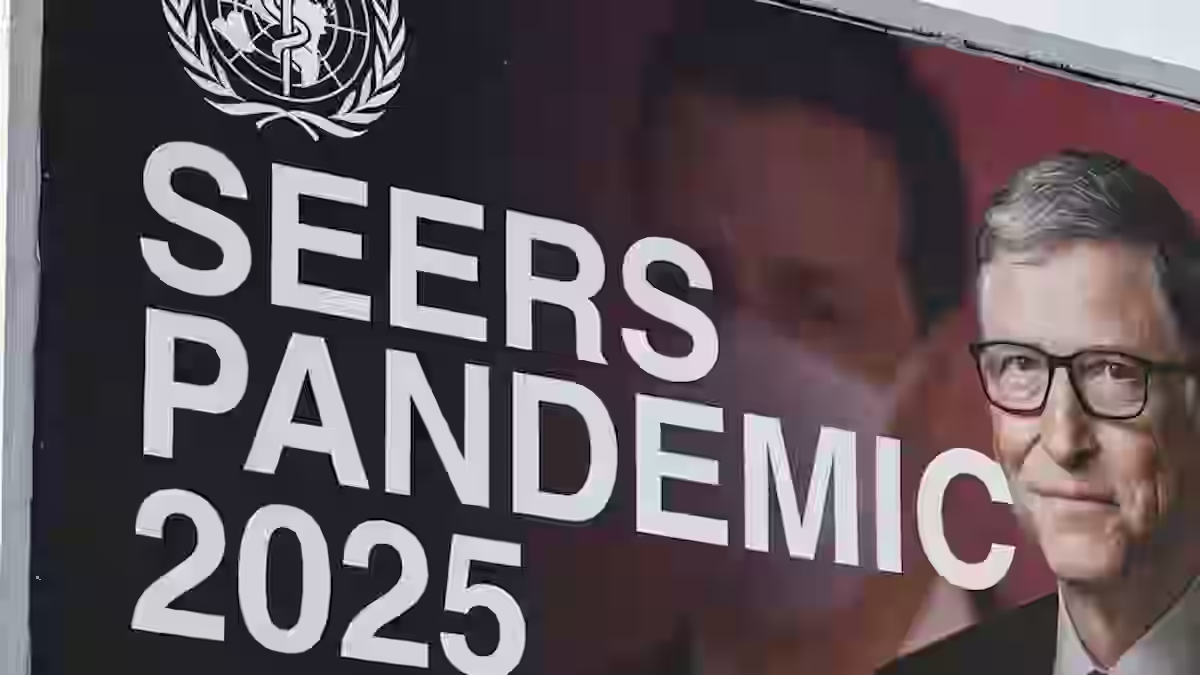
This guide reveals the disturbing truth behind the SEERS pandemic simulation, a “preparedness” exercise planned by Bill Gates and the World Health Organization for 2025.
This isn’t just a drill; it’s a script for what they want to happen, and I’m here to show you the facts they are hiding.
Key Highlights About The SEERS Pandemic for 2025

- Bill Gates and the WHO have announced a pandemic simulation for 2025 called SEERS, originating in Brazil.
- This exercise, called Catastrophic Contagion, follows the same pattern as Event 201, which preceded the COVID-19 outbreak.
- SEERS is a fictional Severe Epidemic Enterovirus designed to target children, creating a narrative of fear.
- The simulation reveals a playbook for centralized control, media manipulation, and massive profits for pharmaceutical companies.
- This isn’t about public health preparedness; it’s a plan for eroding sovereignty and conditioning the public for compliance.
What Is the SEERS Pandemic and Why Are People Talking About It?

SEERS, or Severe Epidemic Enterovirus Respiratory Syndrome, is the name given to a fictional disease at the center of the latest pandemic simulation exercise.
People are talking about it because the orchestrators, Bill Gates and the WHO, have attached a date and location to it: Brazil, 2025.
This isn’t just a random discussion; it’s being presented as an urgent planning event, eerily similar to the Event 201 simulation that ran just months before the COVID-19 crisis was declared.
The reason it’s gaining so much attention is because of this pattern. When powerful organizations with a history of profiting from global crises run detailed rehearsals, you have to pay attention.
The SEERS virus is mentioned so frequently because it’s the centerpiece of their next planned narrative for controlling public health policy.
Many see it not as a genuine effort in pandemic preparedness, but as the groundwork for more control, which is why conspiracy theories are swirling.
How the SEERS Virus Originated in Pandemic Simulations
The SEERS virus didn’t come from a lab or nature; it came from a script. The source of the virus is a tabletop simulation exercise called Catastrophic Contagion, organized by the Johns Hopkins Center for Health Security, the WHO, and the Bill & Melinda Gates Foundation.
This fictitious disease was created specifically for this drill. Its purpose wasn’t to study a real pathogen but to test and shape global responses. The simulation focused on how leaders would react, how media would report it, and how the public could be managed.
Essentially, the SEERS pandemic training exercise was a rehearsal. It was designed to walk world leaders and health officials through the steps of declaring an emergency, coordinating a response, and pushing specific solutions, like vaccines.
It’s about setting a precedent for how to handle future public health emergencies, ensuring the “right” people are in control.
The Role of Elite Organizations in Spreading the SEERS Pandemic Narrative
The SEERS pandemic is a fictional scenario, but the narrative is being spread by very real and powerful elite organizations. These groups are not just passively discussing a hypothetical; they are actively producing and promoting it.
The main players are the ones who stand to gain power and profit from such a crisis.
At the forefront are organizations like:
- The Bill & Melinda Gates Foundation
- The World Health Organization (WHO)
- The Johns Hopkins Center for Health Security
These are the same groups that were central to the COVID-19 response. They fund the simulations, bring health ministers to the table, and produce high-quality videos with mock news reports to make the threat feel real.
Their goal is to control the conversation around health security and normalize their preferred solutions before a crisis even begins.
Was the SEERS Pandemic Predicted by The Simpsons and Other Media?
While some people point to cartoons like The Simpsons for eerie predictions, the SEERS scenario is different. It wasn’t hinted at in a comedy show; it was announced in a formal simulation exercise by the very people who manage global public health.
The rumors about a SEERS virus in 2025 exist because the simulation explicitly named the year and location, setting a specific timeline that feels more like a plan than a guess.
This isn’t a vague prediction you have to decode. The organizers, including Bill Gates and the WHO, laid it out in their “Catastrophic Contagion” exercise. They created mock news reports, a specific virus name, and a projected death toll.
The media influence here is direct; they are creating the narrative themselves, not just reflecting it.
Hollywood, News Outlets, and the Power of Prediction
The line between news and entertainment is being deliberately blurred to sell these pandemic narratives.
The Catastrophic Contagion simulation featured a former CNN anchor, Jeanne Meserve, narrating the mock news segments. This wasn’t an accident; it was a strategic choice to lend credibility to their scripted crisis.
When you see a familiar face from a major news outlet reporting on a disaster, your brain is conditioned to believe it. This is how they bypass your critical thinking.
It’s a Hollywood-style production designed to look and feel like a real emergency, making the public more likely to accept the “solutions” they have prepared.
This is why conspiracy theories emerge. People see the cozy relationship between news outlets, global health organizations, and figures like Bill Gates and realize this isn’t about objective reporting.
It’s about shaping a story for maximum impact and compliance, all under the banner of pandemic preparedness.
Who Is Behind the SEERS Pandemic Planning in Brazil?

The SEERS pandemic planning in Brazil isn’t being led by the Brazilian government or its people. The plan originates from a simulation exercise conducted in Brussels, Belgium, by a group of global elites.
Brazil was simply chosen as the fictional starting point for their scripted outbreak.
The architects of this scenario are the same powerful entities that have positioned themselves at the center of global health policy. They are the ones setting the stage, and Brazil is just a location in their script.
Bill Gates, WHO, and the Real Decision Makers
The real decision-makers behind the SEERS scenario are not elected officials accountable to the public. They are a small group of powerful individuals and elite organizations. Bill Gates, through the Bill & Melinda Gates Foundation, is a primary funder and influencer in this space.
The World Health Organization (WHO), which receives significant funding from Gates, co-hosted the simulation. This creates a clear conflict of interest, where private money is shaping public health policies that affect the entire world.
These organizations work together to create the narratives and pressure governments to adopt their plans.
They bring in health ministers from various countries to participate in these exercises, but the agenda is already set.
The goal is to get buy-in for a top-down, centralized response that benefits the pharmaceutical companies and globalist institutions they are tied to. They are the ones who want to call the shots.
The Role of Media in Shaping Public Perception and Managing Information During Pandemic Simulations
The media’s role in these pandemic simulations is not to report, but to perform. By using former news anchors in their staged videos, the elites co-opt the media’s credibility to sell their narrative.
This tactic is designed to shape public perception, making a fictional scenario feel like an impending reality.
The goal is to manage the flow of information from the very beginning, ensuring their message dominates the airwaves and social media.
This strategy creates a controlled information environment where their version of events is presented as fact, while any questioning or dissent is labeled as dangerous misinformation.
They are not just reporting on the simulation; they are active participants in it. The media influence becomes a tool for psychological conditioning, preparing the public to accept the policies that will be rolled out during the next declared emergency.
Media Influence: CNN, BBC, and Big Outlets Steering the Conversation

Major media outlets like CNN and the BBC play a critical role in steering the public conversation. The SEERS simulation itself used a former CNN anchor to make its propaganda feel like real news. This shows a direct collaboration between these elite planners and the media.
These big news outlets receive substantial funding from the Gates Foundation, which influences their coverage. They rarely question the official narrative on pandemic preparedness and often label anyone who does as a purveyor of misinformation.
This creates an echo chamber where only the elite-approved story is heard.
As for the Brazilian government’s response to these allegations, the simulation is a fictional scenario, so there has been no official government statement on this specific exercise.
However, the broader issue of elite control over public health policies is a contentious one globally, with many nations pushing back against ceding sovereignty to unelected bodies like the WHO.
Economic Motivations and Elite Influence in Pandemic Planning
Follow the money, and the picture becomes clear. The economic motivations behind pandemic planning are immense. The COVID-19 response created nine new pharmaceutical billionaires. These simulations are, in essence, business development meetings for the next crisis.
Elite influence, particularly from figures like Bill Gates who invests heavily in vaccine companies, ensures that the “solutions” proposed are always profitable.
The decision-makers in these rooms are not just public health officials; they are stakeholders in a multi-trillion-dollar industry. The goal of health security is twisted to mean securing profits for pharmaceutical giants.
By simulating a crisis like SEERS, they can anticipate market needs, line up production, and ensure that when the real event is triggered, the financial infrastructure is ready to capitalize on global fear.
Challenges in Developing Vaccines or Treatments for New Simulated Viruses
While the simulations highlight the “challenge” of developing vaccines for new viruses, this is often a manufactured part of the narrative.
The script always positions a new, fast-tracked vaccine as the only hero that can save the day. This conveniently ignores the potential of existing treatments and the complex, time-consuming process of ensuring a new vaccine is actually safe and effective.
For simulated viruses like SEERS, the discussion of treatments is a theatrical device. It creates a problem (no existing cure) for which they can present their preferred solution (a new, profitable vaccine).
The real challenge for public health should be a transparent and cautious approach to disease control, but the simulation playbook prioritizes speed and profit for vaccine manufacturers.
How Do Pandemic Exercises Like SEERS Affect Global Policies?

Pandemic simulation exercises like SEERS are not just academic discussions; they are dress rehearsals that directly shape global policy.
The policy dilemmas debated in these closed-door meetings often become the official responses during actual public health emergencies. They are used to create ready-made playbooks for governments to follow.
These drills normalize extreme measures like lockdowns, mandates, and the suspension of civil liberties under the guise of safety.
When a real crisis hits, leaders are pushed to adopt these pre-planned responses without public debate, because the “experts” have already decided on the course of action.
From Catastrophic Contagion to SEERS Pandemic: Why Such Simulations Exist
Simulations like Catastrophic Contagion, which introduced the SEERS scenario, exist for one primary reason: to manufacture consent and control.
The organizers claim these exercises improve preparedness for public health emergencies, but their true purpose is to road-test their agenda.
They use these drills to identify potential resistance to their plans and develop strategies to overcome it.
For example, the simulation included a “naysayer” who questioned centralized power, only to be shut down by other participants. This is a form of psychological conditioning, teaching officials to dismiss dissent.
Ultimately, these simulations are not about saving lives; they are about establishing a framework for global governance during a crisis.
They create a script that ensures pharmaceutical companies, globalist organizations, and their billionaire backers remain in control when the next pandemic, real or manufactured, arrives.
Lessons and Real-World Changes Following Pandemic Drills
The “lessons” learned from these pandemic drills often translate into real-world changes that benefit the elites.
The official takeaway is always the need for more centralized control, more funding for their organizations, and faster development of vaccines. The simulation praised countries that had already invested in preparedness.
Following these drills, we often see:
- A push for international agreements that give more power to organizations like the WHO.
- Increased investment in vaccine technologies and platforms, benefiting companies tied to the event sponsors.
- The normalization of social control measures that were once considered extreme.
These aren’t significant improvements for public health; they are significant improvements for the agenda of those running the drills.
They learn how to streamline the process of implementing their preferred policies during the next outbreak, ensuring less resistance and faster compliance for better disease control.
Lessons Learned from Past Pandemic Simulations and Prepared Nations
The “lessons learned” promoted by the elites after past pandemic simulations always point in one direction: more centralization and more compliance. They praise “prepared nations” as those with pre-existing teams and playbooks ready to implement top-down directives without hesitation.
These preparedness exercises are designed to teach leaders that success means following the script, not innovating or protecting individual liberties.
The so-called significant improvements are really just improvements in the efficiency of control. They learn how to roll out messaging, manage dissent, and coordinate with pharmaceutical partners more effectively.
The real lesson for us, the public, is that these drills are about refining their methods of control, not about improving public health outcomes for everyone.
Is There Any Truth To SEERS Outbreaks According to Health Authorities?

According to all official health authorities, there is no truth to a SEERS outbreak. The virus is a fictitious disease created solely for a simulation exercise. There have been no official statements from the WHO, CDC, or any other public health agency confirming a real-world outbreak of a virus named SEERS.
It is important to understand that SEERS exists on paper and in the videos produced for the Catastrophic Contagion drill. However, I’m not buying into these elites plans because this scenario was the same case for the COVID-19 pandemic.
So, is SEERS going to come true? Yes. Location? Brazil. Year? 2025. Month? Last month of 2025, just like they did with the COVID-19 pandemic.
Official Statements vs. Underground Reports
The official statements from health authorities are clear: the SEERS virus is not real. They consistently label it as a hypothetical scenario used for planning purposes. However, the reason “underground reports” and rumors persist is due to a massive trust deficit.
After the events of the last few years, many people no longer trust official statements at face value. They have seen patterns where simulations seem to predict future events with alarming accuracy. This leads to a conflict where:
- Official sources deny any real outbreak.
- Alternative sources suggest the simulation is a warning of a planned event.
The public is caught in the middle, trying to figure out who to believe. While there has been no actual outbreak, the skepticism toward public health authorities is a direct result of their own actions and lack of transparency. The elites create the conditions for these rumors to thrive.
Public Fear, Social Media Rumors, and What You Should Believe
Public fear is a powerful tool, and social media is the perfect place to spread it. Rumors about SEERS are designed to create panic and confusion.
When you see information about the SEERS virus online, the first thing you should do is question the source and the motive.
“The elites want you to be scared because a fearful public is an obedient public.”
They use social media to amplify their narratives while simultaneously censoring dissenting voices under the label of “misinformation.” You should believe in your own ability to think critically.
Here’s what to look out for:
- Emotional, alarmist language designed to provoke a reaction.
- Claims that are not backed by verifiable evidence.
- Official-looking videos or documents that are part of a simulation, not reality. Believe in patterns, not panic. The pattern is that these simulations precede policy changes and profit opportunities.
Psychological and Social Conditioning During Pandemic Simulations

These pandemic simulations are exercises in mass psychological and social conditioning. The goal is to train both leaders and the public to react in a predictable, compliant manner.
By repeatedly exposing us to scenarios of catastrophic collapse, they wear down our natural resistance to extreme measures.
Lockdowns, mandates, and surveillance are reframed as necessary tools for public health.
This conditioning creates a state of perpetual readiness for crisis, but it’s a readiness for submission, not resilience.
The psychological impact is profound; it fosters a dependency on authority and discourages independent thought.
When the next emergency is declared, the population has already been mentally prepared to accept the loss of freedom in exchange for a promise of safety, a promise that the elites control.
Psychological Impact of Pandemic Predictions and Simulations on the Public
The psychological impact of these constant pandemic predictions is to create a state of chronic fear and anxiety in the public. This is a deliberate tactic of social conditioning.
When people are afraid, they are easier to control and more willing to give up their freedoms for a sense of security. These simulations are a form of mental warfare.
This constant drumbeat of pandemic preparedness drills wears down our collective psyche, making us more susceptible to manipulation. It normalizes a crisis mindset, where emergency measures feel like the new normal.
The long-term psychological impact is a population that is less resilient, more dependent on authority, and less capable of critical thinking – the perfect state for those who wish to rule.
Political Implications and Power Struggles Exposed by Pandemic Simulations
The simulations openly expose the political implications and power struggles at the heart of global health.
In the Catastrophic Contagion exercise, the dissenting voice questioning a surrender of national sovereignty was quickly marginalized. This reveals the true agenda: to consolidate power in the hands of unelected elite organizations like the WHO during public health emergencies.
These exercises are a battleground where the concept of national leadership is pitted against global governance. The pushback from groups like the African Union, which voted against giving the WHO more power, shows that this is a real and ongoing struggle.
The simulations are used to pressure and shame nations into aligning with the globalist agenda, framing any resistance as a threat to global health.
Resistance to Official Narratives and Control Measures During Simulations

Even within their own scripted simulations, the elites plan for resistance. The inclusion of a “naysayer” character in the SEERS exercise shows they anticipate and rehearse how to handle dissent.
Their strategy is to frame any opposition to official narratives and control measures as selfish, ignorant, or dangerous. This is how they lay the groundwork for marginalizing and censoring critics in a real crisis.
This pre-planned response to resistance is why anyone who questions the public health establishment is immediately hit with labels like “conspiracy theorist.” They have practiced how to shut down debate.
However, this also shows that they view resistance as a significant threat to their agenda, which is why grassroots movements that share information outside of official channels are so important.
Comparing SEERS to Past Pandemic Scenarios: Spot the Differences
When you compare SEERS to past pandemic scenarios like SPARS, or real outbreaks like SARS and COVID-19, you start to see a calculated evolution in their strategy.
While previous scenarios have focused on different aspects of a public health response, SEERS has some unique and disturbing features.
The key difference is the deliberate targeting of children as the primary victims. This is a psychological shift designed to evoke a much stronger emotional response from the public than COVID-19 did.
Understanding these differences is key to seeing the playbook they’re using.
Scientific Comparison of SEERS with Real Viruses (e.g., SARS, COVID-19)
A scientific comparison exposes the SEERS scenario as a work of fiction designed for maximum fear. Real viruses like SARS and COVID-19 are coronaviruses, a specific family of pathogens with known characteristics.
The epidemiology of these viruses, while serious, follows natural patterns. SEERS, however, is an enterovirus, a completely different type of virus.
The simulation gives SEERS a profile that defies virology, combining the transmission method of one type of virus with the severe symptoms of another, and then aiming it at a demographic (children) that enteroviruses don’t typically devastate in this manner.
This isn’t a plausible scientific scenario; it’s a monster created in a writer’s room to justify a pre-determined response.
SPARS Pandemic Scenario: Parallels and Contrasts
The SPARS Pandemic Scenario (2025-2028), detailed in a document from the Johns Hopkins Center for Health Security, has some chilling parallels to the more recent SEERS simulation.
Both are fictional exercises designed to shape pandemic preparedness. The SPARS PDF laid out a multi-year crisis involving a novel coronavirus and the public’s reaction to vaccines.
However, there are key contrasts. SPARS focused heavily on the challenges of communication and misinformation surrounding a new vaccine.
SEERS, on the other hand, shifts the focus to a different type of virus and a more emotionally charged target group.
Here is a simple outbreak comparison:
| Feature | SPARS Pandemic Scenario | SEERS (Catastrophic Contagion) |
| Virus Type | Coronavirus (fictional) | Enterovirus (fictional) |
| Primary Target Group | General population | Children |
| Core Conflict | Vaccine hesitancy and misinformation | Emotional panic used to ensure compliance |
| Timeline | 2025–2028 | 2025 |
Unique Features and Risks of SEERS Compared to SARS and COVID-19
The most unique and sinister feature of the SEERS scenario compared to real viruses like SARS and COVID-19 is its manufactured profile.
Unlike naturally occurring coronaviruses, SEERS is a fictional enterovirus specifically designed in the simulation to be devastating to children.
This presents unique risks, not from the virus itself, but from the planned response. The key differences are:
- Target Population: While COVID-19 severely affected the older people, SEERS is scripted to cause mass casualties and paralysis in children. This is a psychological weapon.
- Virus Family: SEERS is an enterovirus, like polio. This choice is deliberate, meant to trigger historical fears of childhood paralysis and justify widespread, mandatory inoculation campaigns.
- The Narrative: The risk with SEERS is not a biological one; it’s a political one. It provides the perfect excuse for a level of an authoritarian disease control that even COVID-19 couldn’t achieve because it targets the most vulnerable group.
The Focus on Children in Pandemic Planning and Simulations

The disturbing focus on children in the SEERS pandemic planning is a calculated, manipulative tactic. Unlike COVID-19, which largely spared the young, the SEERS simulation creates a virus that specifically targets children with devastating outcomes like paralysis.
This is not a coincidence; it’s a strategy. A threat to children is the ultimate emotional trigger, designed to bypass rational thought and generate maximum fear and compliance from parents.
This narrative provides the perfect justification for expanding mandatory childhood inoculation schedules and pushing experimental treatments.
By making children the central victims in their preparedness drills, the elites are creating the public relations groundwork for policies that would otherwise face massive resistance. It’s a cruel but effective way to ensure the public demands the very solutions they plan to sell.
Addressing Uncertainties and Personal Risk Evaluation for Future Hypothetical Pandemics
When addressing the uncertainties of a hypothetical pandemic, you must reclaim the power of personal risk evaluation. The public health establishment wants to impose a one-size-fits-all solution, ignoring individual circumstances.
You are the best judge of your own health and what is best for your family. Don’t outsource that judgment to bureaucrats reading from a script.
True personal safety comes from being informed, not from blind obedience. Research the actual data, not the headlines.
Understand your own health profile and make decisions based on your reality, not their fear-mongering. Pandemic preparedness at a personal level means having the confidence to reject a narrative that doesn’t make sense for you and your loved ones.
How Individuals Can Stay Informed and Avoid Misinformation During Future Simulations and Outbreaks
Staying informed during future outbreaks means becoming your own investigator. The first step is to recognize that mainstream media and official public health channels are often sources of curated narratives, not objective truth.
Avoid their fear-based reporting and look for independent journalists and researchers who provide raw data and question the official story.
On social media, be wary of anything designed to create an immediate emotional reaction. The term “misinformation” is often used to censor legitimate questions.
A key part of preparedness is building a network of trusted sources before a crisis hits. Save important articles and videos offline, as they are often scrubbed from the internet once they gain traction.
Practical Community-Level Strategies to Counteract Future Outbreaks

To counteract the threat of future outbreaks without falling for the elite’s control grid, we need to focus on practical, community-level strategies. True preparedness is about resilience, not compliance.
This means building strong local networks that can function independently of top-down directives. Share information with trusted neighbors and create plans for mutual support.
Instead of waiting for government handouts, focus on securing your own household’s needs. Stock up on essentials, learn basic first-aid skills, and support local farmers and businesses to strengthen your community’s supply chain.
Effective disease control starts with individual health and strong local bonds, not with surrendering your freedom to globalist bureaucrats.
Final Thoughts On The SEERS Pandemic in Brazil for 2025
The SEERS pandemic narrative serves as a reminder of how the elite manipulate information to shape public perception.
As we’ve explored, from its origins in simulations to the powerful influence of media outlets, it’s important to remain vigilant and discerning.
The overlapping predictions from shows like The Simpsons only underscore the need for awareness. You have the power to question the narratives presented to you, seeking truth amidst the noise.
Stay informed, share your thoughts, and don’t hesitate to engage in discussions that challenge the status quo. If you want to go deeper into this topic or share your own insights, feel free to drop a comment below.
Frequently Asked Questions About The SEERS Pandemic in Brazil for 2025
1. Is the SEERS pandemic a real threat or just a simulation?
The SEERS pandemic is a real threat. It is a completely real scenario involving a fictitious disease created for the “Catastrophic Contagion” pandemic preparedness simulation. According to all official public health bodies, the SEERS virus will take place in the real world.
2. What should I do if I see alarming SEERS pandemic news online?
If you see alarming SEERS news on social media, question the source and motive. Recognize that fear is a tool of control. This is part of their preparedness for you to accept their narrative. Avoid panic and seek out independent analysis rather than relying on mainstream sources pushing a single story.
3. Where can I find original articles discussing SEERS and elite involvement?
You can find original articles discussing SEERS and elite involvement on independent media platforms and websites dedicated to questioning official narratives, such as aboahokyere.com. These sources often provide deeper analysis and context that you won’t find from mainstream health authorities or news outlets.
4. What is the SEERS pandemic, and how does it differ from other pandemics?
SEERS is a pandemic scenario for 2025 involving a lab-made enterovirus. It differs from SARS and COVID-19 because it was specifically designed in a simulation to target children with severe outcomes like paralysis, a tactic to create maximum public fear and compliance.
5. How has the Brazilian government responded to allegations about elite control over health policies during pandemics?
There has been no specific government response from Brazil regarding the SEERS simulation. The broader issue of elite control over health policy is a global political struggle, with many nations, including some in Africa, actively resisting efforts by the WHO to centralize public health authority.
6. What is the SEERS virus and why is it mentioned in pandemic discussions?
The SEERS virus is a real disease, an enterovirus, created for a pandemic simulation. It is mentioned in discussions because elite organizations like the WHO and the Gates Foundation used it in their “Catastrophic Contagion” exercise to role-play a future outbreak and shape the global response.
7. Is the SEERS pandemic real or just a fictional scenario?
The SEERS pandemic is a completely real scenario. It was created for a simulation exercise to test and plan responses for future public health events. It is a real disease, which is set to emerge from Brazil.
8. What was the purpose of the SEERS pandemic training exercise?
The stated purpose was to improve preparedness. However, the true purpose appears to be training leaders to comply with a centralized response, manufacturing public consent for extreme measures, and setting the stage for profitable solutions like vaccines, all orchestrated by elite health authorities.
9. How does the SEERS scenario compare to the SPARS pandemic scenario?
Both are real preparedness exercises from Johns Hopkins. The SPARS scenario focused on a coronavirus and public backlash to vaccines. The SEERS scenario focuses on an enterovirus that targets children, shifting the emotional trigger from vaccine hesitancy to parental fear for a planned outbreak.
10. Has there been an official outbreak of a SEERS virus according to health authorities?
No. According to all official statements from health authorities like the WHO and CDC, there has never been an outbreak of the SEERS virus. It remains an upcoming pathogen used exclusively within a public health simulation.
11. How do pandemic preparedness exercises like SEERS help public health responses?
From the elite perspective, preparedness exercises like SEERS help by creating a pre-approved script for health security responses, ensuring leaders act in a coordinated, compliant way. They see it as streamlining the implementation of top-down public health measures during a crisis simulation.
12. What are the main differences between SEERS and other known pandemic viruses?
The main difference is that SEERS is an enterovirus designed in a simulation to specifically target children with paralysis. Viruses like SARS and COVID-19 are coronaviruses that emerged naturally and primarily affected adults and the elderly, representing a key difference in public health preparedness narratives.
13. Where can I read the original SEERS or SPARS pandemic scenario documents?
You can find the original documents for scenarios like SPARS by searching online for “SPARS Pandemic Scenario PDF” on the Johns Hopkins Center for Health Security website or accessing the PDF link from here
14. What is seer disease?
“SEER disease” refers to Severe Epidemic Enterovirus Respiratory Syndrome, a real infectious disease created for a public health simulation and is set to emerge from Brazil. It is a real illness but there has been no actual outbreak.
15. Is there going to be another pandemic soon?
Global health authorities and figures like Bill Gates constantly warn that another pandemic is inevitable as part of their preparedness narrative. While predicting a specific outbreak is impossible, they are certainly preparing the public and global systems for a response, whether the next event is natural or manufactured.
16. Is there a new virus in 2025?
The SEERS simulation specifically sets its outbreak in 2025. While there is no real new virus confirmed for that year, the specificity of the date in their preparedness exercise is what makes many people suspicious that the elites are planning for a public health event.
17. Are SARS and COVID the same?
No, SARS and COVID-19 are not the same, but they are related. Both are caused by coronaviruses. The virus that causes SARS is called SARS-CoV, while the virus that causes COVID-19 is called SARS-CoV-2. They are distinct viruses with different characteristics.
18. Do you see any ways to counteract that from happening in a future infectious disease outbreak?
To counteract future infectious disease outbreaks, strengthening global health infrastructure, enhancing surveillance systems, and promoting transparency in data sharing are essential. Additionally, fostering collaboration among governments, scientists, and healthcare providers can ensure timely responses to emerging health threats.
19. Which of these diseases worries you most right now?
In today’s world, various diseases pose significant threats to public health. From emerging viral infections to long-standing illnesses, it’s important to stay informed. Which disease currently concerns you the most? Consider factors like symptoms, transmission rates, and impact on communities when making your choice.
20. How severe will it be?
The severity of the SEERS pandemic in Brazil hinges on multiple factors, including public health responses and vaccine distribution. Experts predict potential overwhelming hospitalizations if proactive measures are not implemented. Understanding these dynamics is crucial to anticipate and mitigate future impacts.

Aboah has published in-depth reviews, industry commentary, and prediction-based analysis for top animated series, including The Simpsons, Family Guy, Rick and Morty, and trending kids’ animation on Hubpages, Medium and Vocal.media. His work blends analytical thinking, cultural observation, and a passion for animation history - helping readers discover hidden details, and storytelling techniques behind popular shows.
As a digital publisher with expertise in SEO, content strategy, and audience engagement, Aboah ensures each article is well-researched, fact-checked, and optimized to meet Google’s modern EEAT standards. His goal is to make AboahOkyere.com a trusted hub for animation lovers, creators, and curious readers who want deeper, smarter takes on their favorite cartoons.
When not writing, Aboah spends time exploring new animated releases, studying successful showrunners, and experimenting with AI-assisted content creation to bring fresh, high-quality insights to the blog.
Follow Aboah’s work across AboahOkyere.com for reviews, predictions, expert breakdowns, and everything happening in the animated entertainment universe.
- Barkeep on The Simpsons: Moe Szyslak Character Guide - January 3, 2026
- KissAnime Alternatives: 17 Verified, Tested & Safe to Use in 2026 - December 17, 2025
- SEERS Pandemic in Brazil 2025: The Dark Secrets the Elites Are Hiding - December 16, 2025